Commercial Cleaning Experts Brampton
Professional food safety experts located in Brampton ensure food service establishments, food distribution facilities, bakeries, warehouses, and mobile food units to sanitation standards. They treat frequently handled areas, food prep surfaces, equipment, floors, drains, restrooms, and preparation zones using approved sanitizers, at proper strength, and using documented contact periods.
Important Highlights
- Sanitation specialists from Brampton work with restaurants, grocery departments, commissaries, warehouses, bakeries, schools, mobile vendors, and allergen-sensitive operations.
- Cross-contamination reduction is ensured by treating high-touch surfaces, food-contact equipment, kitchens, floors, drains, restrooms, and storage areas with area-specific procedures.
- Filing of conclusion through tests, reviews, and remedial documentation verifies trained contractors have validated proper chemical concentration, appropriateness, and contact time.
- Daily, regular, and annual activities assigned by zone comprise sanitation timelines founded on hazard, production volume, transitions, releases, and requirements.
- Suppliers should have HACCP, public-health knowledge, safety training training, insurance, testimonials, color-coded implements, and compliance-ready hygiene records.
Brampton Operations That Need Food Safety Cleaning: Which Ones?
Food safety cleaning is essential for any Brampton facility that deals with, keeps, prepares, packages, or provides food. Apply it to your establishment if it comes under public health inspection, food premises regulations, or internal HACCP-based controls. This includes food service venues, employee dining, supply facilities, retail sections, butcheries, seafood counters, retail shops, and facility kitchens.
Proper hygiene protocols remains essential in supply warehouses, processing plants, freezer locations, commercial bakeries, school food programs, reception facilities, and food delivery centers. Portable temporary ventures apply similarly, examples being mobile kitchens, market vendors, and seasonal booths. Your establishment needs recorded sanitation procedures when your workers work with ingredients, section ready-to-serve foods, heat finished items, or maintain allergen storage. In Brampton, food safety stays voluntary; it forms part of regulatory, business, and safety compliance.
What Do Brampton Cleaning Professionals Handle?
Professional cleaning teams specializing in Brampton sanitize touched surfaces, food preparation areas, ground surfaces, and sanitary facilities to satisfy food safety standards and health requirements. Focus on these locations stems from extreme cross-contamination risk, potential for accidents, and compliance issues.
Understanding their cleaning procedures allows you to confirm your facility's cleaning meets required standards and regulations.
Sanitizing High-Touch Surfaces
establish a sterilization frequency
following one-way systems, and separating disinfection tools organized by zone
Kitchen Areas, Floor Surfaces, and Bathroom Spaces
Expect Brampton cleaning experts to target kitchens, floors, and restrooms because each area carries distinct food safety, accident prevention, and sanitation risks. In industrial kitchens, you need grease removal from cooking stations, appliance surfaces, drain systems, preparation areas, and backsplashes to minimize bacterial growth and pest activity.
You should also expect documented flooring maintenance. is likewise provided as part of the service.
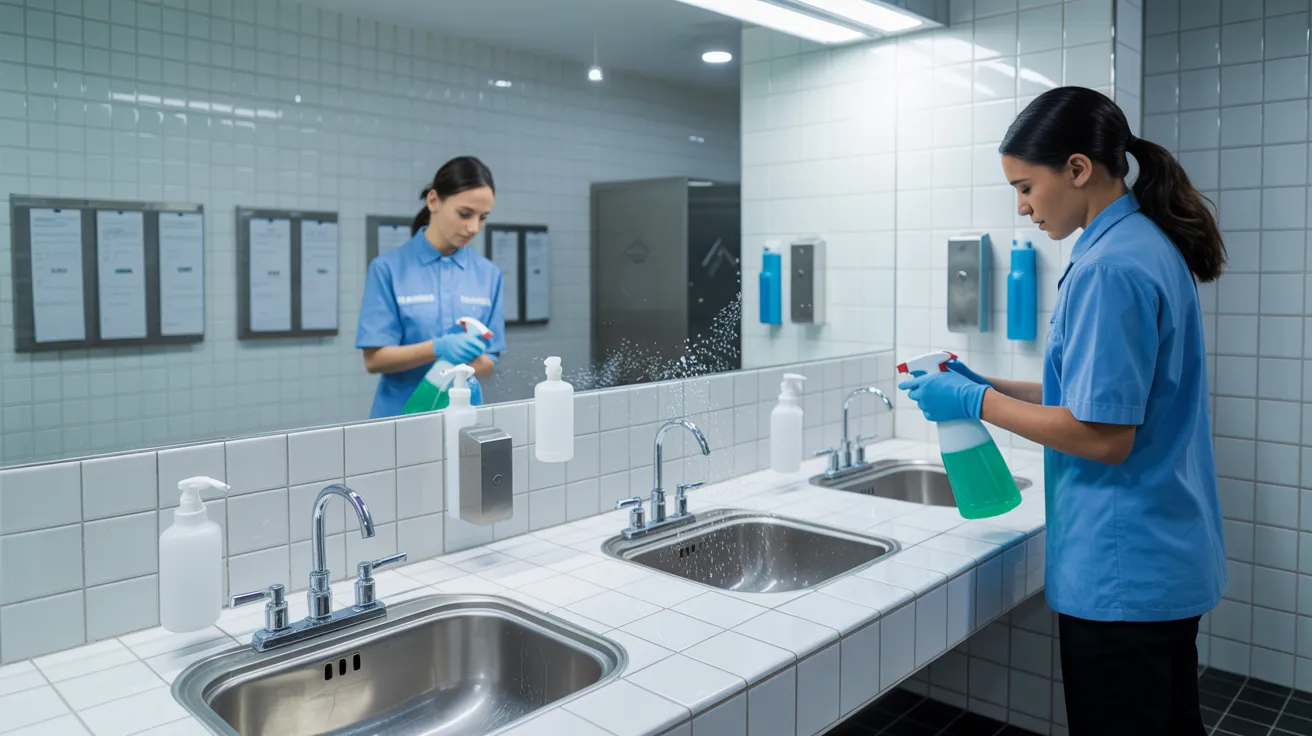
In restrooms, cleaners treat touchpoints, fixtures, partitions, dispensers, and waste containers then refill supplies and eliminate odor. They also maintain restaurant cleaning supply rooms where product storage, sink cleanliness, and drain systems impact daily sanitation standards and worker protection.
Why Food Safety Cleaning Matters in Brampton
To adhere to regulatory mandates and succeed in audits, Brampton facilities must follow appropriate cleaning protocols. You also reduce bacterial spread through proper cleaning of food-preparation surfaces, appliances, and frequently-touched items. Most importantly, you safeguard community wellness by reducing the chance of food poisoning in your establishment.
Regulatory Code Requirements
Since Brampton food businesses must follow rigorous sanitary regulations, your cleaning procedures directly influences your capability to fulfill health codes, defend diners, and avoid regulatory penalties. You must maintain hygienic food handling zones, verifiable cleaning logs, appropriate product handling, and verifiable staff procedures that meet municipal and provincial inspection expectations.
Failure to maintain cleaning standards poses threats violations, compliance orders, loss of reputation, and potential disruption during subsequent audits or compliance reviews.
Contamination Prevention
Adhering to health code standards requires your expertise in stopping cross-contamination throughout daily food handling and cleaning. You need to isolate uncooked items from finished products, clean prep surfaces between tasks, and store cleaning supplies separately from food. Organized systems minimize contamination events and ensure consistent compliance during inspections.
You could implement allergen segregation to prevent priority allergens from contacting common areas, containers, or machinery. Apply separate boards, color-marked equipment, and strict utensil labeling so staff don't mix items throughout cooking or delivery. Mandate handwashing after handling raw meat, seafood, eggs, or allergen-containing products. Swap cleaning rags frequently, and check sanitizer strength with test strips. When you train staff to follow these controls each shift, you develop a more sanitary, secure business that meets Brampton's food safety expectations daily.
Community Health Safety
When food safety cleaning weaken, you don't only risk a failed inspection—you raise the likelihood of food contamination striking customers, staff, and the larger Brampton community. You also weaken your role in protecting public health, especially in high-traffic food premises where pathogens travel quickly through surfaces, equipment, and touchpoints.
You must implement cleaning procedures that eliminate contaminants, properly disinfect, and ensure effectiveness. This entails adhering to contact periods, utilizing authorized sanitizers, recording schedules, and coaching staff to meet compliance standards. These initiatives promote disease prevention by reducing microbes before contaminating food or hands. In Brampton, robust sanitation protects at-risk groups, curtails outbreak likelihood, and proves your diligence. When you maintain standards, you go beyond regulations—you substantially reduce risk and advance safer food handling throughout the city.
How Does Cleaning Support Food Safety Compliance?
Upholding rigorous cleaning routines bolsters food safety compliance by minimizing contamination hazards, preventing pathogen multiplication, and maintaining your facility's adherence to sanitation requirements under HACCP-based programs and public health regulations. You ensure that food-handling surfaces stay visibly clean and microbiologically controlled, supporting documented preventive controls and inspection readiness.
Cleaning efforts additionally bolster allergen control by removing residues that can cause undeclared allergen exposure.
How Do You Plan Commercial Cleaning Work?
build up pollutants. Increase frequency
closures, seasonal-related soil accumulation, or pest-control pressure periods.
Finding Quality Brampton Cleaning Experts: A Guide
Start by screening providers against food-safe sanitation requirements, not cost only. You should verify that each company understands CFIA, public health, and HACCP compliance standards relevant to your facility. Ask for insurance documentation, WHMIS compliance, documented staff training, and supervision practices. Review whether technicians understand cross-contamination risks, chemical handling, and traceable sanitation records.
You must also evaluate business consistency and accountability. Seek references from Brampton food companies, then assess response times, corrective processes, and communication standards. Ensure the company supports supplier audits and can provide inspection-compliant records when authorities or third parties demand verification. Verify equipment is maintained, color-coded items are deployed correctly, and site-specific hazards are understood. A qualified provider safeguards compliance, product safety, and your market standing.
What does a Food Safety Cleaning Plan encompass?
Write out a framework that outlines every sanitation activity, guideline, and role before production begins. You should record cleaning schedules, approved products, ratios, contact periods, tools, and validation approaches for each zone, surface, and piece of equipment. Ensure you include pre-operational inspections, corrective actions, and employee training requirements.
Your program should also address contamination prevention, garbage management, pest control procedures, and recorded timelines for restrooms, drains, floors, and food-contact areas. Detail how you'll separate raw and ready-to-eat processes, support ingredient tracking, and ensure accurate allergen labeling through validated cleaning between product changes. You should assign accountability, maintain signed records, and compare results against regulatory standards, HACCP controls, and customer requirements. When gaps appear, update procedures immediately and retrain staff.
Frequently Posed Questions about the Plan
Are cleaning services offered for nighttime operations in Brampton facilities?
If you operate regulated spaces, you'll also require records that enable audits and maintain compliance.
Can sanitation professionals handle emergency spill response?
Yes, you can discover many Brampton cleaning professionals providing spill response services. They handle hazardous incidents, evaluate risks, contain affected zones, and begin swift decontamination to reduce risk and avoid operational impact. You should confirm timeframes, certifications, PPE measures, and disposal methods. If your facility must meet compliance standards, pick a provider that tracks incidents, adheres to standards, and supports verification.
Are plant-based disinfectants secure for food-handling equipment?
In essence, plant-based sanitizers prove safe for food preparation areas provided you source items marked food-safe that comply with regulatory requirements. Confirm application timing, mixing proportions, and rinse requirements prior to application. Natural-based solutions reduce chemical burden, although you require confirmation of performance against relevant pathogens. For maintaining residue-free conditions, stick to manufacturer directions precisely and ensure the disinfectant meets food industry regulations.
Do maintenance plans permit seasonal variations?
Certainly, maintenance plans accommodate production fluctuations well. Adapt frequencies, staff levels, sanitizers, and validation steps to match with seasonal workflows while sustaining compliance standards. Reduce production downtime by organizing sanitation amid production shifts, high demand periods, and equipment use patterns. Additionally modify procedural documents, training, and monitoring protocols to account temporary risks, new allergens, or higher contamination levels. evidence Ongoing evaluations keep your strategy functional.
Do commercial cleaning providers instruct staff members in sanitation best practices?
Yes, professional cleaning services often train your team on sanitation best practices. You get staff training on correct chemical application, contact times, contamination control, machine breakdown, and record keeping. They typically align instruction with HACCP, GMP, and CFIA or local public health regulations. Many also conduct hygiene inspections to verify compliance, identify gaps, and strengthen remedial steps. This allows you to maintain consistent procedures, succeed in audits, and reduce food safety risks regularly.
Conclusion
Partnering with Brampton commercial cleaning and food safety professionals means more than cleaning—it guarantees your operation meets inspection standards and your standards are defensible. From processing facilities to kitchens, each sanitized surface and organized section lessens contamination risk and prevents major expenses. By arranging service on appropriate schedules and executing a comprehensive cleaning strategy, you shield staff, clients, and your image. In a heavily regulated sector, clean environments are non-negotiable—they're vital to proper management.